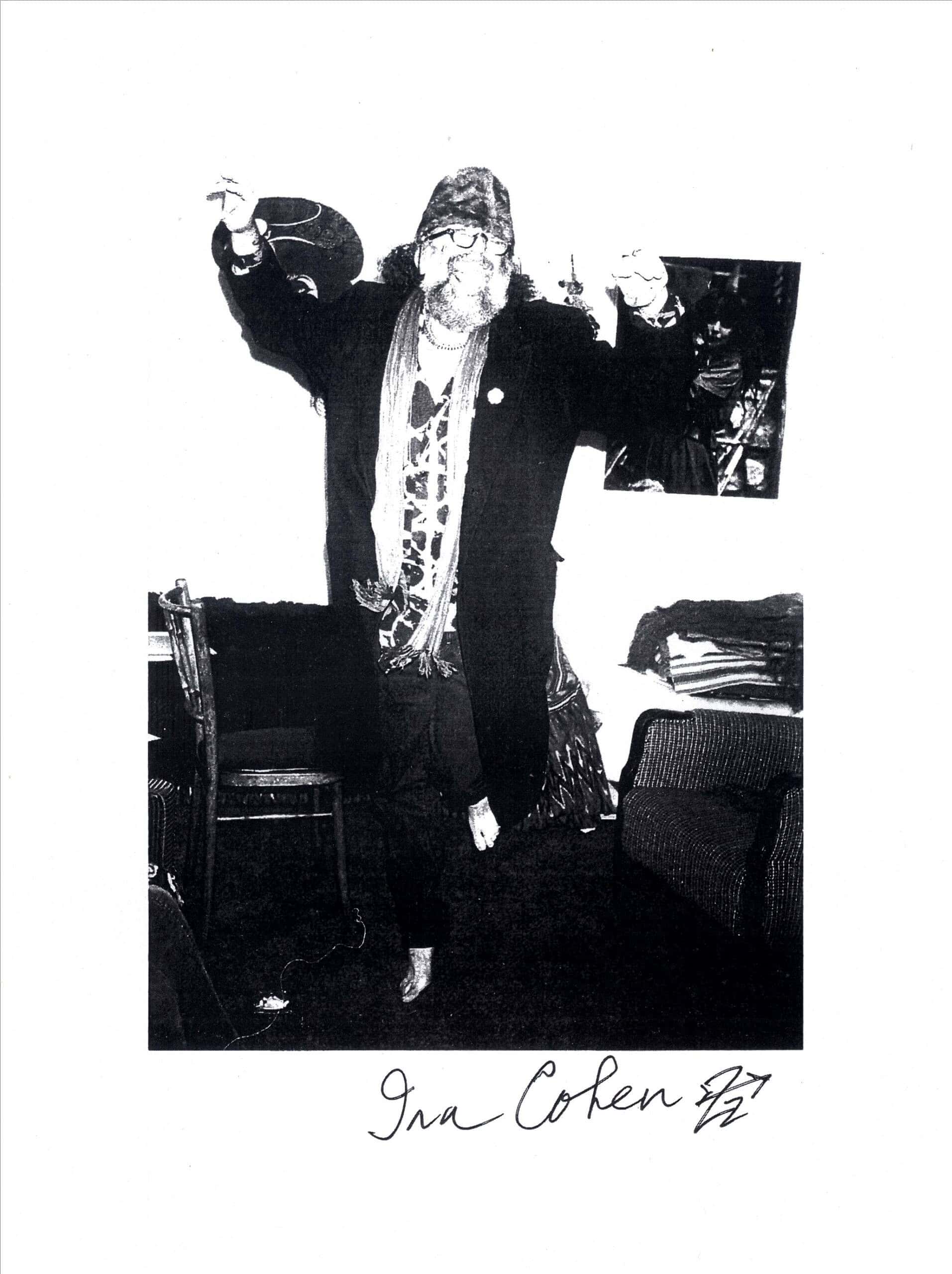
Ira Cohen

Ira Cohen event at Flying Books

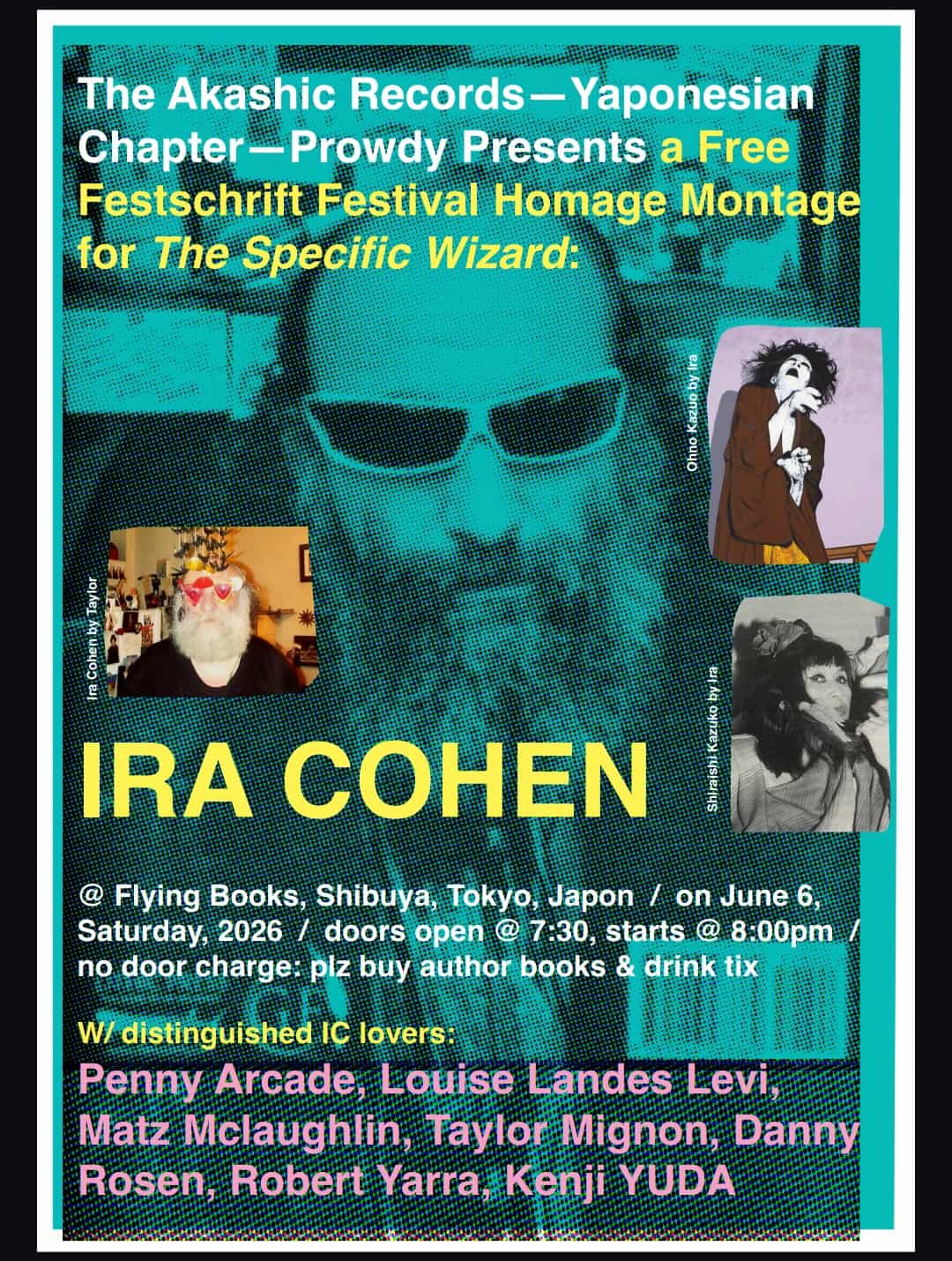
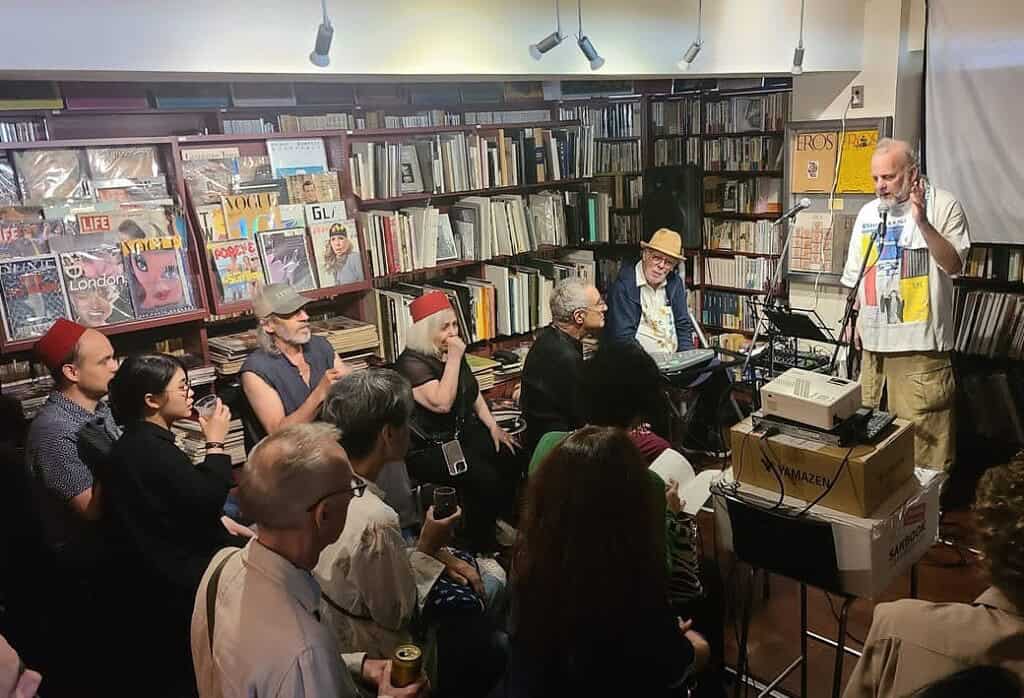
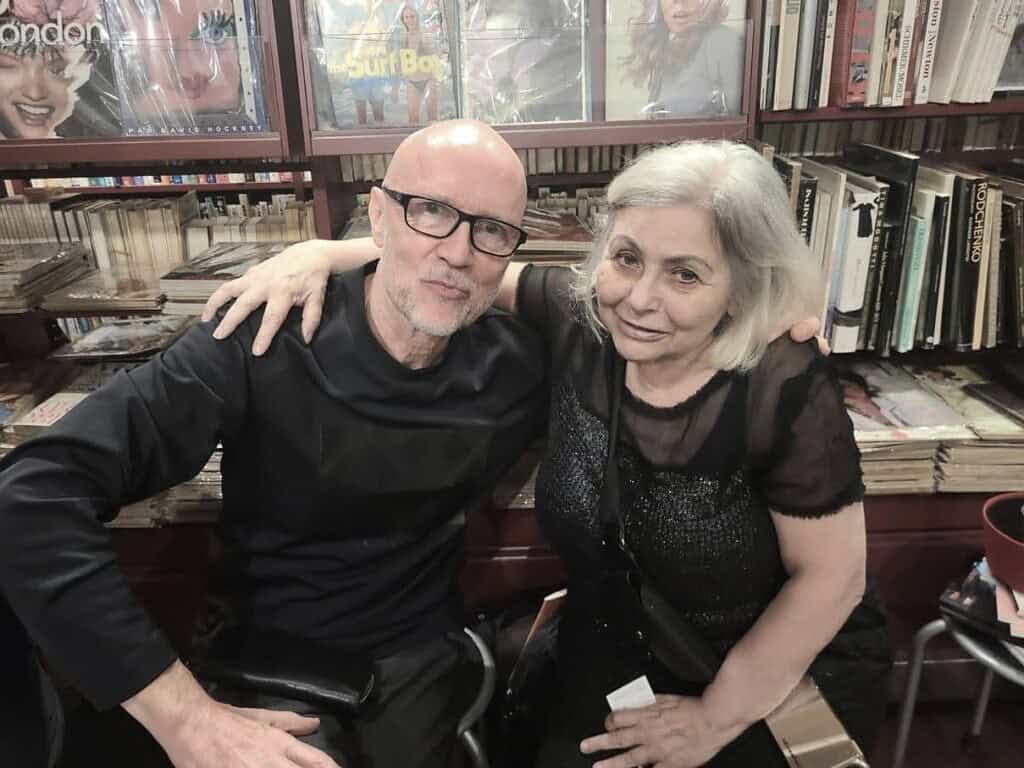
Ira Cohen event for A Certain Kind of Wizard at Flying Books in Tokyo on June 6, 2026.

Music by Morgan Fisher of Mott the Hoople fame.
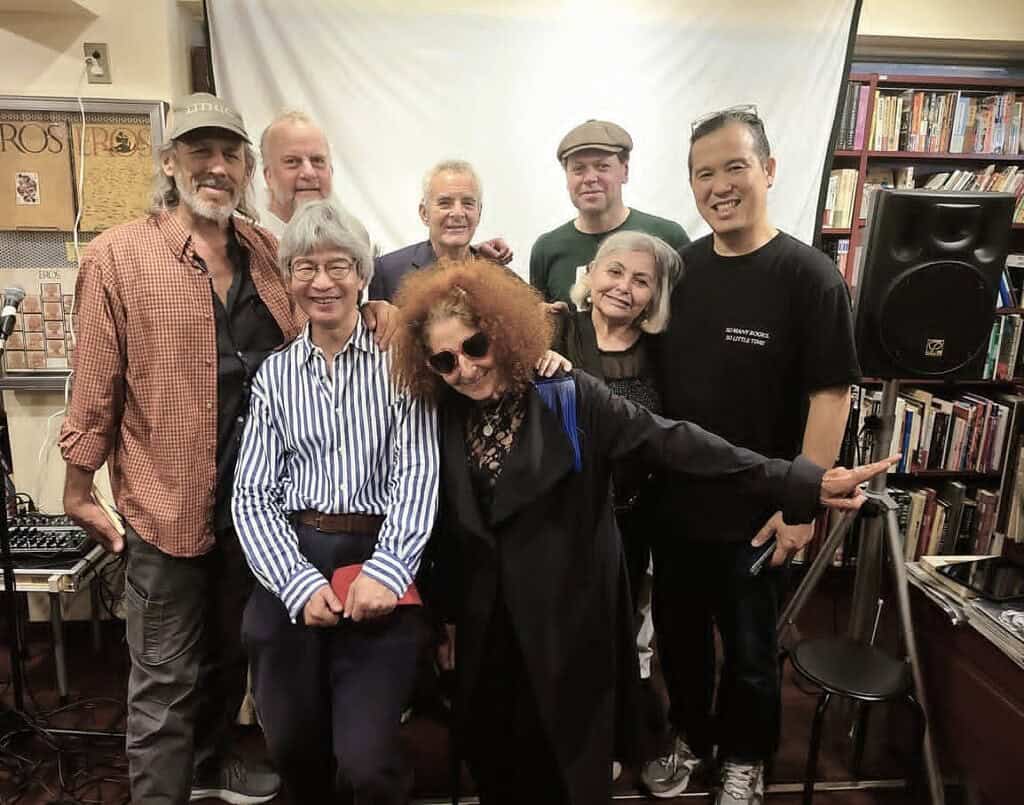
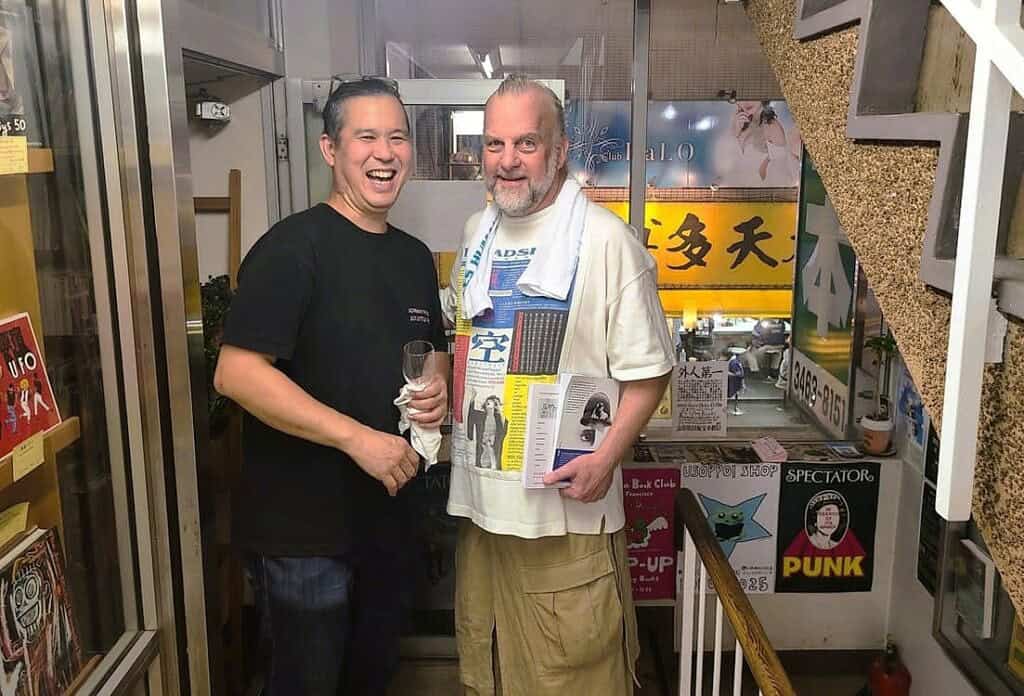
Danny Rosen, Taylor Mignon, Robert Yarra, Louise Landes Levi, Kenji Yuda, Matz McLaughlin, who took his name partly from Marty Matz, Kazuhiro Yamaji (owner of the Flying Book Store), and Penny Arcade.

Photos by Roland Hagenberg.

Ira Cohen night part1 2026.6.6 at Flying Books Tokyo
Ira Cohen night part2 2026.6.6 at Flying Books Tokyo

A Poem by Ira Cohen

for Robert Yarra & Naomi Wright

Between the heroism of the outlaw
& the weightlessness of Death
I dream on the train of things
so evanescent I can’t record them
any more than an old clown can
remember his triumphs or that
place out of this world
& without a single belvedere.
Between our point of origin & our
destination we wish for middle
names worthy of our aspiration
My dream is a cloud seeking to
avoid rest when daylight fades
in the arms of another–
Passing the wreckage we enter
the tunnel & discover the light
on the other side. . This hieroglyphic
souvenir like the hotel key
in my breast pocket signals
the end of our journey.
Let us not forget to drop it in
the mailbox of lost things.

July 12, 2003,
on the train from Newscastle to London

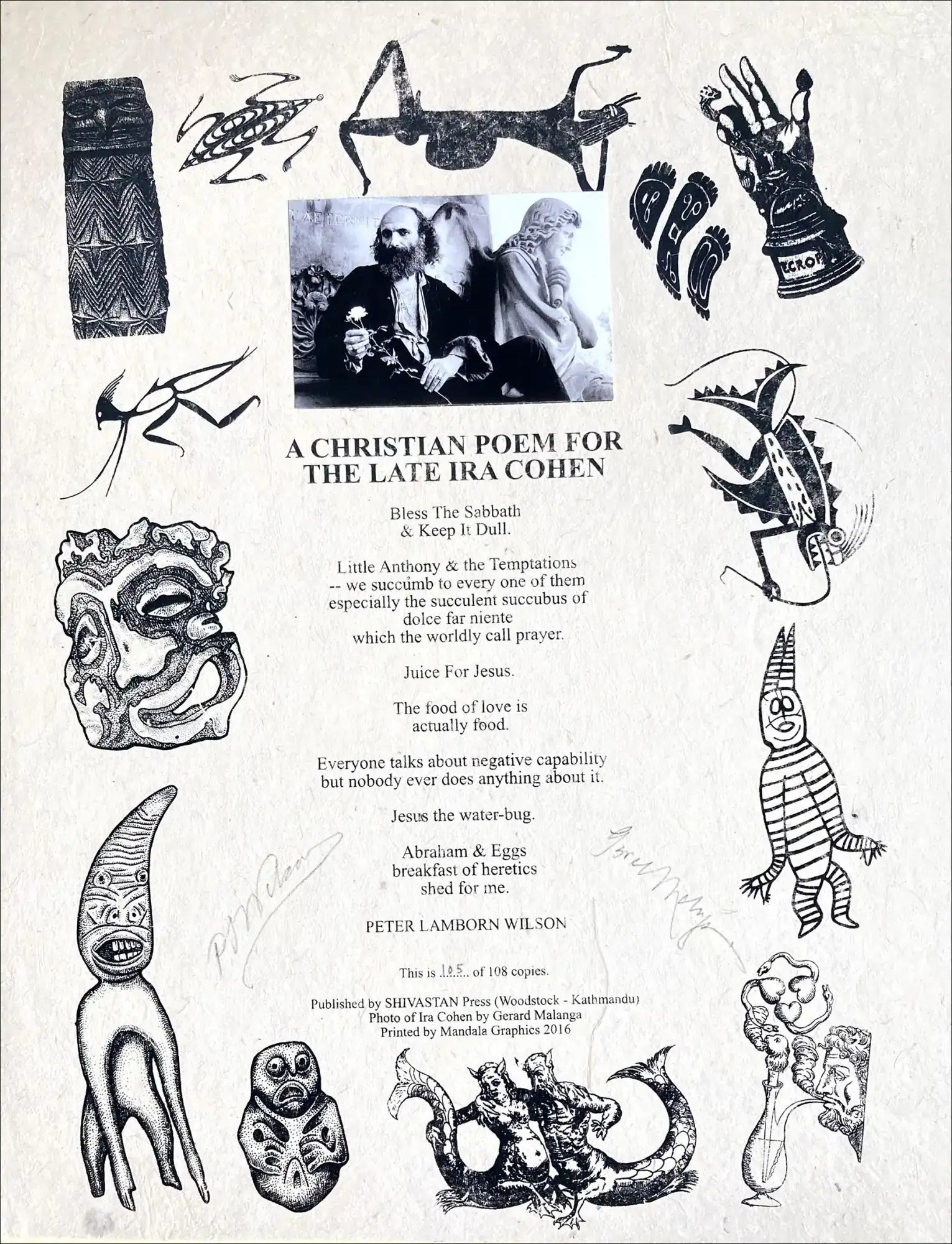
Poem shown here true to how it is printed in Chaos & Glory, Poems by Ira Cohen, Elik Poetry #3, published by Elik Press, Salt Lake City, 2004.

A review of two books from Shivastan Press

by Louise Landes Levi

This review was previously published in Otoliths and is posted here courtesy of Louise Landes Levi.

Independent publishing is an increasing rarity in the corporate dimension in which we are, by the merciless law of the state & the state of affairs in the new millennium, compelled to live and hopefully, despite obstacles, to evolve. Shivastan Press, w. books printed in Katmandu, Nepal & distributed fr. Woodstock, NY, is the rare exception, printing handcrafted finely-illustrated chapbooks by some of the finest poets of our times, both those known & those lesser known.

Ira Cohen has an international reputation as film maker, photographer, story teller & eclectic poet. The treasury of images & the symbolic correspondences to which his mind seems so particularly adapted have found their way into esoteric collections around the globe, but if one is not in the privileged situation of being his friend, his work is not that easy to access. Large collections of his photography are now being published, one, albeit in Germany, Up Close & Personal (Papageien Verlag); but, regrettably, no inclusive collection of his poetry is as yet forthcoming. Each of his chapbooks thus offers a rare glimpse of the poet’s mind, his dedication to the muse & his insight into the mysteries exceeding her.

Whatever You Say May Be Held Against You, handwritten on Nepalese rice paper, is illustrated w. the author’s portrait of Allen Midgette, “the last of the moccasins” (to whom the book is dedicated), several of the poet’s own collages in black & white & a portrait of the poet by Marco Bakker handsomely printed on the black back cover of the rice paper book.

The poems span a broad time cycle, beginning w. Cohen’s seminal work in Katmandu fr. the mid to late seventies, where he also fathered Bardo Matrix Press, in some ways the predecessor to Shivastan, the one in which his work is now represented.

fr. Himalayan Journey

After 15 days/ walking in the Himalayas/we arrive at a strange place (Seta Gompa)/ at nightfall/ my head is empty of all thought/ as I enter the Lama’s room/ filled with great cauldrons/ & charred pots,/ golden ochres,/ Rembrandt browns/ the wood of demon masks/ gleaming under layers of/ smoke & butter/ Outside as the light breaks/ clouds above & below/ like a domed ceiling/ painted by Tiepolo.

Later & more recent poems concern the national & international crisis of 9/ll—(Cohen’s girlfriend is visiting & dreams about the catastrophe the night before it occurs.)

fr. Today’s Headline (May 20 2002)

There’s a sucker born every minute/ is the credo of capitalism/The Age of Reason has come/ & gone/ with the wigs of/ authority & self interest/ It’s not them, it’s US

& the general artistic milieu of NYC, or what’s left of it, when Cohen returns to his mother’s apartment on 106th & Broadway after years of world travel

fr. A Concert of Evening Ragas, in memoriam Pandit Pran

The discovery of poetry as an art of swimming/lucid breath in transparent water/ ...No fear of drowning/ in this ocean of sound.

Many of Cohen’s closest associates—Sheldon Rochlin, Vali & of course Angus MacLise—are given complex & sweet farewell by the poet who eulogizes them. At the same time, he prepares his own mind, w. a warmth that exceeds conjecture, for the inevitable.

fr. Creeley’s Poem

by the time you figure this, that will overtake you/ archaic wonders, my ass, it’s the last inning. Time for some heroics/ Fame is faint in the mirror/ the man in black is my affinity.

Cohen has escaped category & has reason to both rue & celebrate his isolation. I was happy to see a generous selection of his poetry included in Chris Felver’s BEAT & recommend Whatever You Say to those unfamiliar with his work & also, of course, to those who have read his other recent chapbook, Chaos & Glory ( Elik Press). His aggressive script on delicate lokta rice paper will add an additional level of intimacy to the contemplation of his multi cultural & luminous poetic inquiry.

fr. Lost Words

It is the eye of the spirit which opens under water/when you seek you will not find me./ I am already here.

Whatever You Say is a collector’s item.

Shivastan has also published Laynie Browne’s evocation of the perennial philosophy, Original Presence, as part of its wide reaching publication &, in some cases, republication of esoteric works in the context of the late 20th century & the early millennium. Many of its authors—Anne Waldman, Peter Lamborn Wilson, Janine Pommy Vega—spent decades studying & traveling in the Far East, The Middle East & Asia in efforts to comprehend the roots of disaster in the occidental worlds & to first hand, absorb the last traces of the wisdom cultures of the East, even those threatened by consuming winds.

Laynie Browne & her contemporaries, Juliana Spahr, Lee Ann Brown et.al., born in the generation following the above-mentioned, did not take to the road, but stood firm, in their endeavors to create a post-beat sensibility & a new voice with which the greater Feminine might express itself. A generation of women writers emerged in America, 1985 & onward, for whom the Beat generation was NOT a major reference but whose model of collaboration & mutual sustenance nevertheless informed it.

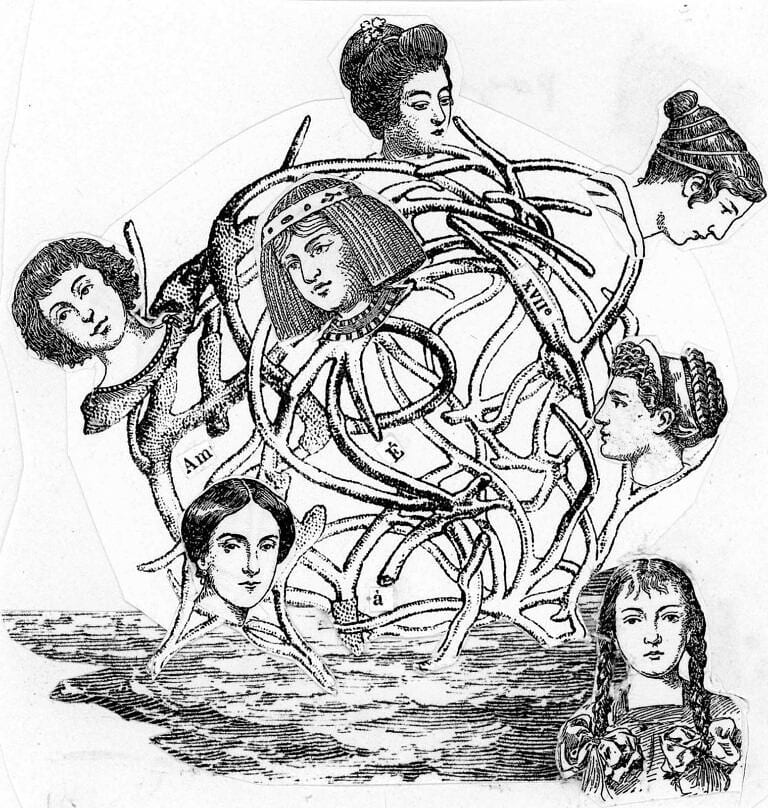
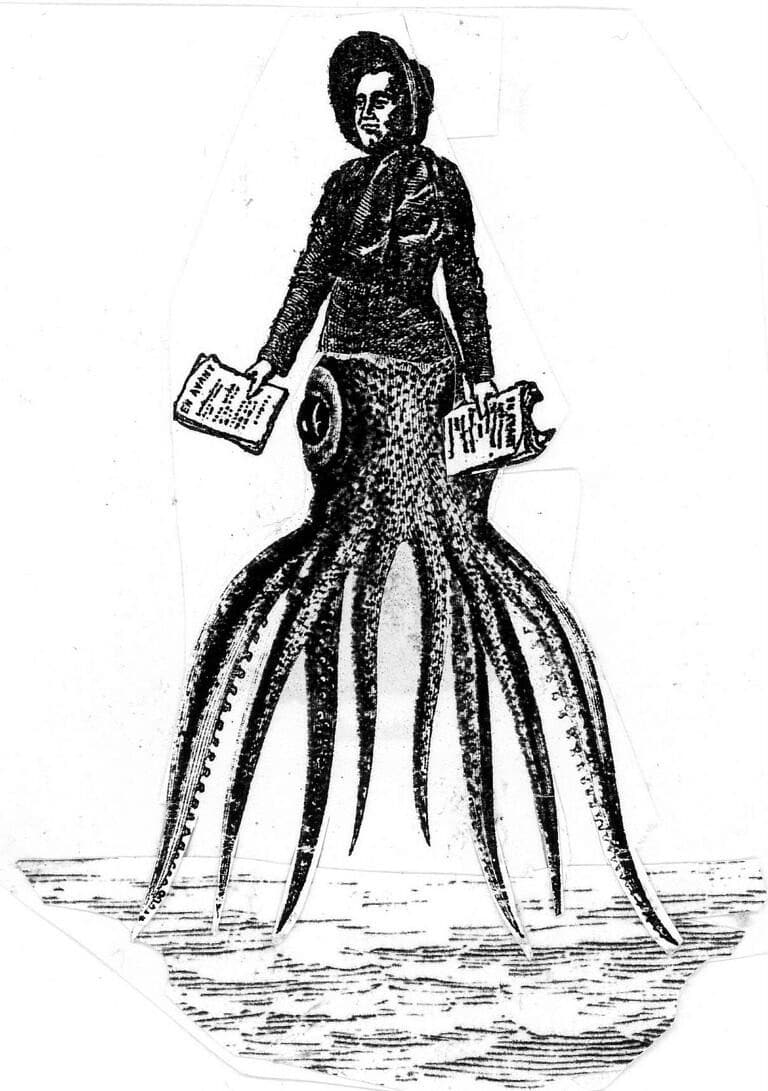
In Original Presence, Laynie travels inward. The book is dedicated to Avram Davis, & the Cabalistic axis upon which the poetic intonation is turning & to which it is tuned is unmistakable. The book is again printed on rice paper & is illustrated w. surreal & poignantly detailed collage by Toni Simon, an illustrator of other works by Brown, Web of Argiope (Phylum Press) & Pollen Memory (Tender Buttons).

Toni Simon: Girls’ Faces

Original Presence is divided into 3 parts: The Girl of Salt, A Quiet Flame & Sudden Inscription. Laynie’s exquisite line, her ability to condense her voice into near crystalline essence is evident through out.

I went to see the girl of salt/ She gave herself to water-/She gave herself to question/ She was nowhere apparent & yet I went to her

Laynie defines, redefines & undefines her search.

The salt girl can reconstitute hersellf and leave the sea/ girl of wax/ girl of paper/ not the watcher/ but the center…

Brown makes indirect reference to hermetic teachings & their language systems but does not depart fr the stylistic innovations that qualify the aesthetic formulations of the century she inhabits. The tensions between the urgency of her meditation, the maintenance of her personal linguistic & the richness of the metaphor she inherits formulate the matrix & mysterious lucidity of this text.

Quiet Flame introduces substance to the seeker’s domain

the candle alone shines of itself and for itself/ practice of the maiden’s chamber/wherever the line is the sand

whereas in Sudden Inscription

Nevertheless, my closed eyelids are encoded with breathing letters/Do you say then language is a garb? A cloth with which to cover the raw head of vowels?

the author reclaims her autonomy.

You write upon my hand as if to say/ Come goblet, come fixture of mind/ Remember the liquid cunning of the sky/Return to my uniform of hands/ pressed upon you/ allowing you to stand.

One reads this book in acrobatic suspension,. sustained in a visionary apparatus, that like all true poetry, is nevertheless tuned to the fundamental of the human harmonic & to its form.

Brown is a master of the postmodern school & sensibility. Those who have followed her work—Rebecca Letters (Kelsey Str.), The Agency of Wind (avec) & Gravity’s Mirror (Primitive Press) et.al.—understand this. In Original Presence we are introduced to an esoteric journey. Brown crosses the divide bringing her study of ancient text to intimate contemporary presence.

Toni Simon: Octopus Woman

Typed script & surreal image, printed on the blankness—at times almost textual—of the rice paper page, bring a third element to the visual field, at times dissolving it completely.


Louise Landes Levi’s The Deep Diamond, portions of which were included in issue two of Otoliths, is forthcoming as a Shivastan broadside.

Shivastan Press books are craftprinted in limited editons of 333 copies in Kathmandu, Nepal, & are distributed by the publisher, Shiv Mirabito, 54 Tinker Street, Woodstock, NY 12498.

A selection of Ira Cohen’s poetry, On Feet of Gold (poems 1968-87), was reprinted in connection w. a photography retrospective at the OCTOBER GALLERY, London, Nov. 2007 – Feb. 2008, & can be ordered on line from the publisher, Synergetic Press.

Laynie Browne´s latest book is Daily Sonnets, published by Counterpath Press, Denver.

A conversation about A Certain Kind of Wizard

Please join City Lights bookstore on August 19, 2025, in the virtual world, as Ira Landgarten and Tate Swindell discuss the life and work of Ira Cohen. We are celebrating the release of A CERTAIN KIND OF WIZARD – a dual publication from Lithic Press and Golda Foundation. Please note this is NOT an in-store event & you will need to REGISTER HERE for the Zoom broadcast. It begins at 6pm SAN FRANCISCO TIME. It will be recorded and posted online, eventually. You can turn your camera on or off, and you will be muted by City Lights. 

Bowery Poetry Club Celebration of Ira Cohen

It was a wonderful evening of readings and remembrances at the Bowery Poetry Club to celebrate Ira Cohen’s life and work.

May 14, 2025, hosted by Tate Swindell with readings by
Timothy Baum, Karen Butcher, Lila Dlaboha, Hamid Idrissi, Baba Ben Israel, Shiv Mirabito, Valery Oisteanu, Ondi, Chris Rael & Danny Rosen.

Ira Cohen tribute 5-14-25 Bowery Poetry Club, NYC
Video by Robert O’Haire

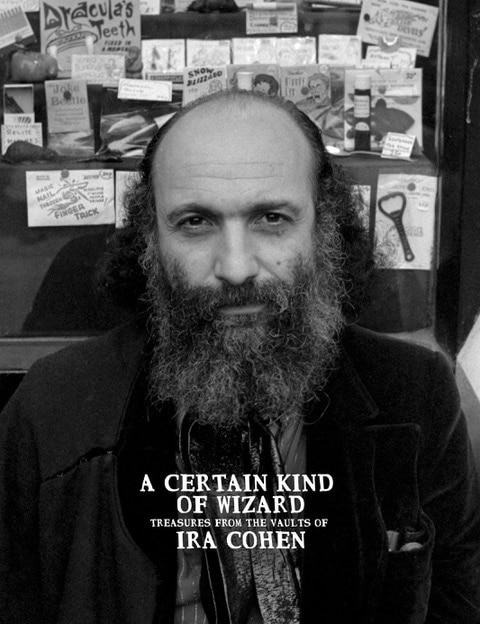
A Certain Kind of Wizard

A Certain Kind of Wizard

Treasures From the Vaults of Ira Cohen

A compendium of work—notebook and diary entries, interviews, music and book reviews, poetry and prose, and photographs—by Ira Cohen.

ISBN: 9781946583369
Publisher: Golda Foundation in partnership with Lithic Press
Publication Date: November 21st, 2024
Format: Paperback
Pages: 410
Language: English

Poet, photographer, filmmaker, publisher, and dauntless world traveler, Ira Cohen was a mythic figure of boundless energy who was a catalyst for creative scenes in New York, Tangier, Kathmandu, Amsterdam, and wherever else he happened to alight in his wanderings. Cohen knew the best and the brightest — William Burroughs, Gregory Corso, Vali Myers, Brion Gysin, Paul Bowles, and Charles Henri Ford, among so many others. Julian Beck and Judith Malina of The Living Theatre and filmmaker Jack Smith were close friends and often collaborators on artistic projects. A Certain Kind of Wizard includes Cohen’s poetry, photos, interviews, and prose writings from his remarkable journals. This is a book not to be missed.

Publisher’s Note      

 “A Certain Kind of Wizard,” published jointly by The Lithic Press and The Golda Foundation, evolved directly from a manuscript that Ira Cohen and Jordan Zinovich, his friend and the editor on this project, developed over a period of four months in 2006, painstakingly going over all of Ira’s work. They tried to find a publisher but were not successful, and so, with great regret,  they abandoned the project.

 Ira Cohen and I were good friends, and I knew and admired a lot of his work, but, after someone sent me a copy of the manuscript and I read it (much of it, especially the prose pieces, I had never seen before), I was blown away by the beauty of it all. And so, I decided to publish this book and honor my friend’s legacy. 

I asked Danny Rosen, publisher of the Lithic Press, for practical advice, since Lithic makes such beautiful books. Instead, he suggested that the Golda Foundation and the Lithic Press publish the book jointly, a proposal which I gladly accepted. Danny and I, along with Romy Ashby, the editor, and Ira Landgarten and his photos, are the ones who brought you this book, but it is really the book that Ira and Jordan Zinovich made, working together. Indeed, without Jordan and his dedication, there would probably have been no book at all. So, thank you, Jordan, and, if these thanks come rather late, well, better late than never, I hope.

Robert Yarra

This excellent essay below about Ira Cohen, as well as my “Publisher’s Note,” was not included in the original book, A Certain Kind of Wizard. We are hoping to include them in the Spanish translation that Aurora Dorada Ediciones of Valencia, Spain, is currently working on.

Seek The Hidden Treasure by Ian MacFadyen

These prose texts, interviews, poems and photographs testify to the remarkable life and work of Ira Cohen, and provide a unique picture of the counterculture of the 1960s, ’70s and later. They reveal a way of being in the world which seems unattainable today — the freedom to cross geographical, political, cultural, linguistic and religious boundaries.

Ira played many parts in his time, he was a great performer — a poet by vocation, he was also a photographer, film maker, collage artist, magazine editor, publisher, scholar, actor, magician, story spinner, jazz afficianado, hipster, Great Rememberer, drug connoisseur, spiritual seeker, devotee of Dante, Rumi, Villon, Chatterton and Borges, mythographer, mythologizer, cabbalistic hermeticist, “Electronic Multi-Media Shaman,” and more — “Much more!” 

This book documents and evokes Ira’s travels in India, Nepal and North Africa and his study of Hinduism, Islam, Buddhism, the Kabbalah, and occult lore. As he tells George Gatsas in an interview from 2003, he went in search of adventure, he was drawn to other cultures because “I knew them as a poet would know them — by reading poetry that comes from these places and mystical sources.” The counterculture then was community and connectivity, an open underground nexus based upon shared anti-establishment values and spiritual concerns, with its own potlach economy of exchange, hospitality and collaboration, and the little “samizdat'”magazines in which Ira’s work was initially published played a significant role. Included here are two important long poems of the counterculture: “The Stauffenberg Cycle,” written in 1977 in Germany at the time of the far Left Baader-Meinhof Group, a period of increasing militancy and paranoia, and “Notes Of An Alchemist,” from 1983, a celebration of creative and mystical communion in the New York avant-garde loft scene of the late 1960s. 

The use of tape recorders was prevalent in the 1960s counterculture and was instrumental in the transmission and circulation of its values and ideas, and Ira appears as both interview subject and interviewer. He was drawn to “those with special knowledge,” exemplified by his interviews with Paul Bowles, Brion Gysin and Charles Henri Ford, inspirational writer-artists of an earlier generation. Ira admired two special “tape books,” William Burroughs’ The Job and Brion Gysin’s Here To Go, and the present book is in that special lineage — transcribed interviews interleaved with relevant written texts, combining the oral and textual impulses of Ira’s discourse, disseminating his ideas and telling the story of his life, his voice “rising up off the page.” 

In a 1983 dialogue between Ira and Brion Gysin, Gysin several times wound back the tape and erased parts of the recording at random. Ira was alarmed and protested about the loss of some great material, but Gysin’s response couldn’t have been clearer: “When I say erase the word, I mean erase the fucking word — wipe it out.” For Ira, multiple time zones coexisted and radiated and converged in unwritten present and future time, but the past was irrevocable, incarnated in the Divine Word; it was sacred and must be preserved, and he often quoted the Zohar: “Words do not fall into the void.”

This kaleidoscopic compendium reflects the loves and passions of Ira’s life — listening to the Moroccan trance music of the Jilala, tracking the effects of smoking grass and taking LSD, mescaline and majoon, the wonders of mirror magic and storytelling, Duende and deep feeling in poetry, the religious devotion of sadhus in India, meeting William Burroughs in Tangier. . .  Vivid, vibrant memories of Kathmandu, Tangier, Hardwar, Amsterdam, London, Paris, Okinawa, Bombay and Iraklion percolate through the book in a unique synthesis of travel writing, autobiography and prose poetry, Ira evoking place and time through sparkling, jewelled details and heady syntactic jumps in psychic flow, reportage in present time merging with the memories and mythos of vanishing worlds.   

There were profound connections between his parents’ deafness and Ira’s visual art and his vocation as a poet, but he could never unravel these threads, or preferred not to. “I was a child of deaf parents,” he said, “I learned to spell on my fingers even before I could talk.” From a very early age he was the interpreter who translated and transmitted the hearing world for his parents, an intermediary between the world “out there” and the silent home, moving between silence and sound, signing and speech. Ira could talk for the world, but listening was important, too, as he had always “listened out” for his parents. “The sounds of the world caress the heart of my ear,” he said, like the sibilant message of the Tangier night when it whispered to him, “Con su permiso. . . “

In Nepal in the early 70s Ira’s partner Petra Vogt filled notebooks with her drawings and writings and Ira became increasingly drawn to the physical act of writing in notebooks; his distinctive script flowing across and around the pages. As in his childhood, reportage and reverie were uniquely intertwined and a poem could begin with “something that actually happened” or with the emergence of a talismanic phrase with a haunting audio-scriptoral insistence, the nucleus of elliptical juxtapositions and streaming associations. Ira’s urgent desire to read a written poem aloud and to give voice to his inner world is revealing, mirroring in reverse his childhood role. He would pay tribute to his mother, Faye, “who taught me how to speak / with my hands / in the language of love” and he would write in notebooks by hand the poems of love which he would then read aloud or “out loud internally.” 

Ira’s Mylar photographs exemplify the psychedelic ’60s, but Ira believed that his images transcended mirror distortion as an analogue for drug trips. Rather, as he told fellow photographer Ira Landgarten, he felt he had opened “Pandora’s Box of Cosmic Imagery” and channeled “an unearthly beauty,” the thrilling manifestation of celestial spirits and demonic archetypes. His Mylar photographs were inextricably connected with his love of divination and scrying — mirror, candle flame and crystal gazing took him out of himself into a silent realm of slowly unfolding, transfixing visual enchantment. This process was intimately connected with Ira’s unique portrait photographs of the artists, actors and seekers he knew; his uncanny ability to capture poignant moments, expressive gestures and the mortal beauty of the human face.  

In 1999, Ira told poet, translator and scholar John Solt that psychoactive drugs had affected his work “to the very core.” They helped him become aware of his natural synesthesia, driving the sensorial correspondences of his creativity through different media. They also played their part in Ira’s fascination with the Akashic Records, conceived as an immense astral photographic film and audio bank through which the entire history of human thought-forms and experiences may be read and heard. Ira wrote of “tongues quelled by history” and believed the Akashic gave “sky speech” to the deaf and speechless and to those silenced by oppressive regimes, and it corresponded with his own experience of “unattended moments” of transcendental awareness. Like William Burroughs, Ira recognized such experiences and their place in his thought and art was crucial. 

Towards the end of his extraordinary life, Ira wrote that “greed has infected the human heart”, and he saw violence and degradation everywhere. He grieved and he suffered the Deep Blues, but he never gave up his lifelong quest for holistic pattern and spiritual meaning, and he continued to “seek the hidden treasure.”  In his poem “Cat’s Cradle” he wrote: “Once on a dark night full / of glittering stars above the Coromandel coast / I looked up to see the sympathetic strings / red & blue, which held the sky / together by natural law. / I have never seen them since, / but I know they are still there.”

Ian MacFadyen,
London, April 2022

Buy A Certain Kind of Wizard for $35. This price includes postage within the United States. Order with the Buy Now button.

The book is also available from Lithic Press.

For orders outside the US, please send an email to goldafoundation@gmail.com.

A Certain Kind of Wizard Celebration

Please join us to celebrate Ira Cohen in NYC

There will be poetry and poetic remembrances, photographs, film clips, music and more. Refreshments will be provided.

Wednesday May 14th, 2025 at 7pm
Bowery Poetry Club at 308 Bowery, NYC

Thursday May 15th, 2025 at 7pm
The Bunker at 222 Bowery, NYC

Poet, photographer, filmmaker, publisher, and dauntless world traveler, Ira Cohen was a mythic figure of boundless energy who was a catalyst for creative scenes in New York, Tangier, Kathmandu, Amsterdam, and wherever else he happened to alight in his wanderings. Cohen knew the best and the brightest — William Burroughs, Gregory Corso, Vali Myers, Brion Gysin, Paul Bowles, Charles Henri Ford, and so many others. Filmmaker Jack Smith, Julian Beck and Judith Malina of The Living Theatre were close friends and collaborators on many projects. A Certain Kind of Wizard includes Cohen’s poetry, photos, interviews, and prose writings from his remarkable journals.

Ira Cohen Readings

Bowery Poetry Club, New York, 2010

Ira Cohen - Bowery Poetry Club - September 8 2010

Song of Nothing, Zebulon, Brooklyn, New York 2008

Ira Cohen - Song of Nothing

Swiss Institute, New York, 2007

Ira Cohen & Mahasiddhi - Swiss Institute NYC - May 2 2007

Can Writing Bring it Back, Rapture Cafe, New York, 2007

Ira Cohen - Can Writing Bring It Back

Ira Cohen reads Poem for Ronnie Burk

Ira Cohen reads "Poem for Ronnie Burk"
If you would like to know more about Ronnie Burk and this reading head on over to haroldnorse.com.